
 +65 6253 7296

A lot of patients arrive at their first ENT consultation with the same question they have been carrying for months: is this serious enough for me to be at an ENT clinic?
That's because ENT problems are unusually easy to put off. A blocked nose has been there so long it feels normal. The ringing in one ear comes and goes. The child keeps getting ear infections, but the antibiotics always work eventually. These patterns are familiar to an ENT specialist in Singapore.
This FAQ is designed for patients who are looking for clear answers before deciding whether to seek specialist care, preparing for a consultation, or trying to understand a diagnosis or treatment plan they have already received. It covers conditions across the full ENT spectrum: ear, nose, sinuses, throat, sleep, and children's ENT.
This page focuses on clinical questions — conditions, symptoms, treatments, and what recovery involves. For questions on how to choose a specialist, what consultations cost, and how Medisave and insurance apply, you may visit these companion guides:
The earlier the question is asked, the more options there usually are.
General ENT Questions
Foundational questions about when ENT input is appropriate, what an ENT specialist treats, what to expect at a first consultation, and how referrals work in Singapore.
For most mild or first-time ear, nose and throat symptoms, a GP is the right first port of call. Specialist input becomes appropriate when symptoms: (1) persist beyond two to three weeks of GP treatment, (2) keep recurring, or (3) start affecting sleep quality, hearing, breathing, swallowing or voice.
Specific situations that warrant ENT assessment:
- Sinusitis or nasal congestion lasting more than 12 weeks despite treatment
- Recurrent ear infections — three or more in six months, or four or more in a year
- Hoarseness lasting longer than two weeks without a clear cause
- A neck lump that does not resolve within two weeks
- One-sided symptoms in the nose or ear — asymmetry is always worth investigating
- Any sudden or unexplained change in hearing
Some symptoms require prompt attention regardless of duration. Sudden hearing loss, blood in nasal discharge or coughed-up mucus, difficulty swallowing with unexplained weight loss, witnessed breathing pauses during sleep, or new facial weakness should not wait for a routine GP appointment.
ENT specialists cover the ear, nose, sinuses, throat, larynx, and related structures of the head and neck.
Ear conditions: hearing loss, sudden sensorineural hearing loss, ear infections, chronic otitis media, perforated eardrums, eustachian tube dysfunction, tinnitus, vertigo and balance disorders, cholesteatoma, impacted earwax.
Nose and sinuses: allergic rhinitis, chronic rhinosinusitis, nasal polyps, deviated septum, turbinate hypertrophy, nosebleeds, smell disorders, sinonasal tumours.
Throat and larynx: tonsillitis, recurrent tonsil infections, chronic sore throat, swallowing problems, voice disorders, vocal cord lesions, laryngopharyngeal reflux (LPR), throat and laryngeal cancer.
Sleep: obstructive sleep apnoea, snoring, upper airway obstruction.
Head and neck: lymph node enlargement, thyroid lumps, salivary gland conditions, head and neck cancer.
Dr Gan's subspecialty focus is rhinology, including complex sinus disease, nasal polyps, skull base conditions, and revision sinus surgery.
A first ENT consultation typically runs 20 to 30 minutes and includes a detailed clinical history, a physical examination, and a discussion of findings and next steps.
The history covers when symptoms started, what makes them better or worse, what has already been tried, and other relevant background information. For nose and sinus conditions, examination usually includes a nasoendoscopy: a thin, flexible camera passed through the nostril to examine the nasal passages, sinus openings, and upper throat in real time. For ear problems, an otoscope or microscope is used. For throat and voice concerns, a flexible laryngoscope is used.
After examination, the specialist explains the findings and discusses management options. Depending on findings, further investigations — a CT scan, an audiogram, or a sleep study — may be arranged. If surgery is discussed, the specialist should explain the procedure, what it aims to achieve, and what recovery involves.
No — a referral is not required to book a consultation at a private ENT clinic. Patients can contact the clinic directly.
A GP referral is relevant in two situations: if attending a public hospital specialist outpatient clinic where it improves subsidy eligibility, or if a corporate insurance plan requires one for reimbursement purposes. When in doubt, check with your insurer before the appointment.
If prior investigations have been done — CT or MRI scans, audiograms, surgical records — bringing them to the first consultation saves time and helps the specialist build a fuller picture from the outset.
Ear FAQs
Hearing loss, earwax, chronic infections, tinnitus, and eustachian tube dysfunction — the most common ear-related questions patients ask before booking a consultation.
Yes — sudden sensorineural hearing loss is treated as an ENT emergency. It is defined as a rapid deterioration in hearing, typically in one ear, occurring over 72 hours or less. Many patients notice it upon waking. It is often accompanied by a sense of ear fullness, tinnitus, or dizziness.
For a detailed explanation of causes and treatment options, see Sudden Hearing Loss.
The AAO-HNS Clinical Practice Guideline on Sudden Hearing Loss (Chandrasekhar et al., 2019) recommends assessment and treatment begin as early as possible, ideally within two weeks of symptom onset. Waiting to see if the hearing returns on its own significantly narrows the treatment window. In some cases of sudden hearing loss, earlier treatment using steroids may be associated with better outcomes, depending on the underlying cause.
Causes include viral inflammation of the cochlea, vascular events, autoimmune inner ear disease, and — though rarely — a tumour on the hearing nerve (acoustic neuroma), which is why imaging is usually done even after recovery. If hearing drops suddenly in one ear, same-day ENT or emergency department assessment may be warranted.
Earwax impaction typically causes gradual, symmetrical muffling of sound, a sense of fullness in the ear, and sometimes mild tinnitus or itching. If there is wax visible on examination and hearing improves immediately after professional removal, that is reassuring.
Seek assessment if any of the following apply:
- Sudden or rapid hearing change
- Pain, discharge, or bleeding from the ear
- Vertigo or balance problems accompanying the hearing change
- Facial weakness or numbness
- Symptoms that persist after a wax removal attempt
- One-sided hearing loss without an obvious cause
Cotton buds and ear candles are not recommended for earwax management. Cotton buds can push wax further in and traumatise the canal lining. Ear candles have no evidence of benefit. Microsuction under direct vision is the recommended method for earwax removal as it allows the clinician to examine the ear canal and eardrum directly while clearing the wax.
Chronic ear disease — whether recurrent acute infections or persistent middle ear fluid — usually has contributing factors that need to be addressed alongside the infection itself.
Conservative management:
- Topical antibiotic and steroid drops for active infection
- Ear protection from water during active disease
- Treatment of underlying nasal and sinus disease, which affects eustachian tube function
- Allergy management where relevant
- Regular ear cleaning under microscopy to remove debris and monitor the eardrum
Surgical options:
- Ventilation tube (grommet) insertion for recurrent middle ear effusion or repeated acute infections
- Tympanoplasty to repair a perforated eardrum
- Mastoidectomy for disease that has spread to the mastoid bone
- Cholesteatoma surgery when a skin cyst has developed in the middle ear
The appropriate approach depends on the underlying cause. Recurrent ear infections in children often improve substantially when adenoid disease and nasal allergy are addressed alongside ear treatment.
For many patients, tinnitus cannot be permanently eliminated, but its impact can be managed. The goal of care is often to reduce how noticeable or disruptive it feels over time.
The first step is identifying and treating any reversible cause: earwax, medication side effects, a middle ear condition, or otosclerosis. Where a reversible cause exists, addressing it can meaningfully reduce tinnitus.
For ongoing tinnitus without a correctable cause, management focuses on reducing the distress and interference it causes:
- Sound therapy and white noise devices reduce the perceptual contrast of the tinnitus
- Hearing aids, where there is associated hearing loss, frequently help
- Tinnitus retraining therapy and cognitive behavioural therapy may address the psychological impact
- Sleep hygiene and stress management play a larger role than many patients expect
Sudden-onset tinnitus with any associated hearing change needs urgent assessment — it may indicate sudden sensorineural hearing loss requiring prompt treatment.

The eustachian tube connects the middle ear to the back of the nose. It equalises pressure across the eardrum and drains fluid from the middle ear space. When it functions poorly, patients experience a sense of ear fullness, muffled hearing, and crackling or popping, especially during pressure changes such as flying or diving.
Eustachian tube dysfunction is one of the more common reasons patients develop recurrent ear infections, chronic middle ear fluid, or persistent hearing difficulties. It is also closely connected to nasal disease — chronic rhinosinusitis, allergic rhinitis, and adenoid enlargement in children can all impair eustachian tube drainage.
First-line treatment addresses the underlying nasal inflammation: intranasal steroid sprays, decongestants, and management of contributing allergy or sinus disease. In refractory cases in adults, eustachian tube balloon dilation — a procedure that uses a small balloon catheter to gently widen the tube — can improve function in selected patients.
Nose & Sinus FAQs
Sinusitis, nasal polyps, allergic rhinitis, sinus surgery, revision surgery, and nasoendoscopy — the questions most commonly raised in rhinology consultations.
Rhinitis affects the lining of the nasal passages — causing runny nose, sneezing, congestion, and postnasal drip. It may be allergic or non-allergic. Sinusitis means the sinus cavities are also inflamed or infected, causing facial pain or pressure, reduced sense of smell, and thick discoloured discharge.
The two frequently occur together. Patients with chronic sinusitis often have coexisting allergic rhinitis. Treating one while ignoring the other tends to produce limited results. Rhinitis can exist without sinusitis, but the reverse — sinusitis without an underlying nasal condition as a contributing factor — is less common.
Acute sinusitis following a cold typically resolves within ten days to two weeks. If symptoms persist beyond ten days without improvement, or worsen after initial improvement, bacterial infection may be developing and warrants medical review.
Subacute sinusitis lasts four to twelve weeks. Chronic rhinosinusitis is defined as symptoms lasting twelve weeks or longer despite appropriate treatment. At that point, the clinical picture changes from treating an acute infection to managing a chronic inflammatory condition — which typically requires a CT scan and nasoendoscopy for proper assessment.
Antibiotics are appropriate when bacterial infection is confirmed or strongly suspected. They are not appropriate for the first seven to ten days of most sinusitis, which is typically viral in origin. Repeated antibiotic courses for viral sinusitis do not speed recovery and are not recommended.
Functional endoscopic sinus surgery (FESS) is one of the treatment options for chronic sinus conditions, and suitability depends on careful patient selection.
Surgery is typically considered when:
- Symptoms have persisted despite at least eight to twelve weeks of appropriate medical treatment, including nasal steroid sprays, saline irrigation, and targeted antibiotics
- CT imaging shows structural disease consistent with the symptoms
- Significant nasal obstruction, nasal polyps, or recurrent infections are substantially affecting quality of life
FESS does not cure chronic sinusitis. It improves drainage, removes obstructive disease, and allows topical medications to reach the sinus lining directly. Post-operative care — consistent saline irrigation, correct use of nasal steroid sprays, and attending follow-up appointments — is a significant determinant of long-term outcomes. Major complications from FESS are uncommon, though all surgical risks are discussed with patients in full before any procedure is scheduled.
Nasal polyps are inflammatory tissues that develop in the sinuses and can block the nasal passages and sinus drainage pathways. They cause nasal obstruction, loss of smell, recurrent infections, and reduced effectiveness of topical nasal sprays — because the medication cannot reach beyond the obstruction.
Surgery is the appropriate discussion when:
- Medical treatment (nasal steroid sprays, short courses of oral steroids) has not achieved adequate control after eight to twelve weeks
- The obstruction is significantly affecting breathing, sleep, or smell
- Recurrent infections are being driven by the polyp obstruction
- Any concern about underlying pathology — certain polyp subtypes require histological examination
The surgical approach is FESS with removal of polyps and opening of affected sinuses. Polyps have a significant tendency to recur, and long-term topical steroid use after surgery is part of the management plan.
For patients with severe, recurrent polyp disease that returns despite surgery and topical treatment, biologic therapy — a class of injectable medicines that target the specific type-2 inflammatory pathway driving nasal polyp disease — is now available in Singapore as part of specialist-guided management for eligible patients with specific inflammatory criteria. It is not a first-line treatment and eligibility is assessed on a case-by-case basis.
Revision sinus surgery refers to a repeat procedure in a patient who has already had sinus surgery previously. It is a meaningfully different undertaking from primary surgery.
The anatomy after prior surgery has been altered. Scarring, adhesions, or incomplete opening from the original procedure change the surgical landmarks. There may also be disease that was inadequately addressed the first time, or new pathology that has developed since — different polyp subtypes, fungal elements, or conditions such as aspirin-exacerbated respiratory disease that were not part of the original clinical picture.
Patients who present for revision surgery typically fall into a few patterns:
- Symptoms that improved initially but returned — sometimes because post-operative care was not followed, sometimes because the original surgery was incomplete
- Symptoms that did not improve after the first procedure
- Structural complications from prior surgery
Thorough pre-operative assessment is essential: a current CT scan, nasoendoscopy, and a careful review of the previous procedure. Image-guided navigation during surgery is particularly valuable in revision cases where anatomy is significantly altered.
If previous sinus surgery has not delivered lasting results, that does not mean there are no further options. A fresh specialist assessment usually identifies a specific reason for recurrence and a targeted approach to address it.
Allergic rhinitis is rarely cured in the same way an infection is cured, but long-term remission is achievable for many patients, and meaningful symptom control is achievable for most.
The foundation of management is avoidance of known triggers where practical, combined with intranasal steroid sprays and antihistamines. Used correctly and consistently, these keep most patients comfortable.
Allergen immunotherapy — delivered as sublingual drops or tablets, or as subcutaneous injections — is the closest available treatment to disease modification. It works by gradually desensitising the immune system to specific allergens. In suitable patients, it can induce remission that persists after the treatment course ends. It requires a commitment of two to three years, but for patients with significant allergy-driven symptoms it is a discussion worth having with a specialist.
A nasoendoscopy is a diagnostic examination where a thin, flexible or rigid endoscope is passed through the nostril to examine the nasal passages, sinus openings, the nasopharynx (back of the nose), and the upper throat. A topical anaesthetic spray is applied beforehand to numb and decongest the nasal lining. The procedure takes approximately three to five minutes.
It provides information that no external examination can offer: the condition of the sinus drainage pathways, the appearance of the nasal lining, presence of polyps, whether adenoid tissue is enlarged, and the state of the eustachian tube openings. For most sinus and nasal complaints, nasoendoscopy is an essential part of the first consultation.
At Dr Gan's clinic, nasoendoscopy is priced at SGD$380 before GST. MOH published data shows the typical total bill across private clinics ranges from $543 to $956 (inclusive of GST) — a range that reflects variation in facility fees, consumables, and clinic pricing across the market. For a full breakdown of diagnostic and surgical costs, see ENT Specialist Consultation Cost Singapore 2026.
Throat & Voice FAQs
Sore throat, tonsil surgery, voice disorders, and laryngopharyngeal reflux — the questions that come up when symptoms involve the throat, larynx, or voice.
A sore throat lasting more than three to four weeks — or one that keeps recurring — warrants a proper assessment rather than repeated courses of throat lozenges or antibiotics. The most common causes in adults are:
Laryngopharyngeal reflux (LPR): stomach acid reaching the throat without causing typical heartburn. It typically presents with throat clearing, morning hoarseness, and a persistent sensation of something stuck in the throat.
Postnasal drip: mucus from the nose or sinuses dripping down the back of the throat, causing irritation and a chronic tickle. Often associated with rhinitis or sinusitis.
Voice strain: common in teachers, singers, and those who use their voice heavily, where the throat feels sore and fatigued.
Chronic tonsil disease: recurrent tonsillitis or tonsil stones can cause persistent discomfort, bad breath, and difficulty swallowing.
A persistent sore throat — particularly with difficulty swallowing, weight loss, a neck lump, or voice change — requires a flexible nasoendoscopy and laryngoscopy to exclude anything serious. These symptoms should not be repeatedly managed with antibiotics without a proper examination.
The threshold for surgery differs between adults and children.
In children, the primary indications are obstructive sleep apnoea from enlarged tonsils and adenoids, recurrent severe tonsil infections meeting established clinical criteria (the Paradise Criteria, specifying both frequency and severity thresholds), and significant airway obstruction affecting growth, behaviour, or sleep quality.
In adults, surgery is considered for recurrent severe tonsil infections disrupting work or daily life despite adequate treatment, chronic tonsillitis not responding to medical management, tonsil stones causing persistent symptoms, and any concern about tonsillar malignancy — which, though uncommon, must be excluded when persistent asymmetry or an unusual appearance is found.
Adults generally have a more difficult recovery from tonsillectomy than children — pain tends to be more significant and the recovery period longer. Surgical technique influences post-operative discomfort; this is worth discussing with the specialist before proceeding.
A proper voice assessment begins with a detailed history — how the change developed, whether there are triggers, what the patient does professionally, and any associated symptoms. Examination follows.
Flexible laryngoscopy allows direct visualisation of the vocal cords during speech and breathing. Videostroboscopy uses a strobe light to capture slow-motion images of vocal cord vibration — essential for identifying subtle lesions such as nodules or polyps that may appear normal on standard laryngoscopy.
For functional voice disorders — where the problem lies in how the voice is being used rather than a structural lesion — voice therapy with a speech-language therapist is often the appropriate first-line treatment, and for many patients it achieves substantial improvement without any procedure. For structural lesions such as nodules, polyps, cysts, or Reinke's oedema, surgery is considered when voice therapy has not resolved the problem. The approach is typically microlaryngoscopy, performed under general anaesthesia.
Professional voice users — teachers, singers, performers — warrant particular attention. The threshold for assessment is lower, and a genuine trial of voice therapy before any procedural decision is appropriate.
LPR is acid (and sometimes non-acid) reflux that reaches the larynx and pharynx rather than just the oesophagus. This produces a different symptom picture from the classic heartburn of gastro-oesophageal reflux disease (GORD/GERD).
LPR patients often have no heartburn at all. Instead, they describe chronic throat clearing, hoarseness that is worse in the morning, a sensation of something stuck in the throat (globus), a chronic cough, or persistent postnasal drip that does not respond to nasal treatment.
Management combines proton pump inhibitors (PPIs) for acid suppression, dietary modification (reducing acidic foods, caffeine, fatty meals, alcohol, and late-night eating), and attention to voice hygiene. Improvement is typically slow — weeks to months — and does not respond to antibiotics, which is a common source of frustration when the diagnosis has not yet been established.
Where symptoms do not respond to standard management, or where laryngeal changes are noted on examination, gastroenterology review is appropriate.
Sleep-Related ENT FAQs
Snoring, sleep apnoea, weight loss and OSA, surgical options, and drug-induced sleep endoscopy — the questions patients with disrupted sleep and partners of loud snorers most often ask.
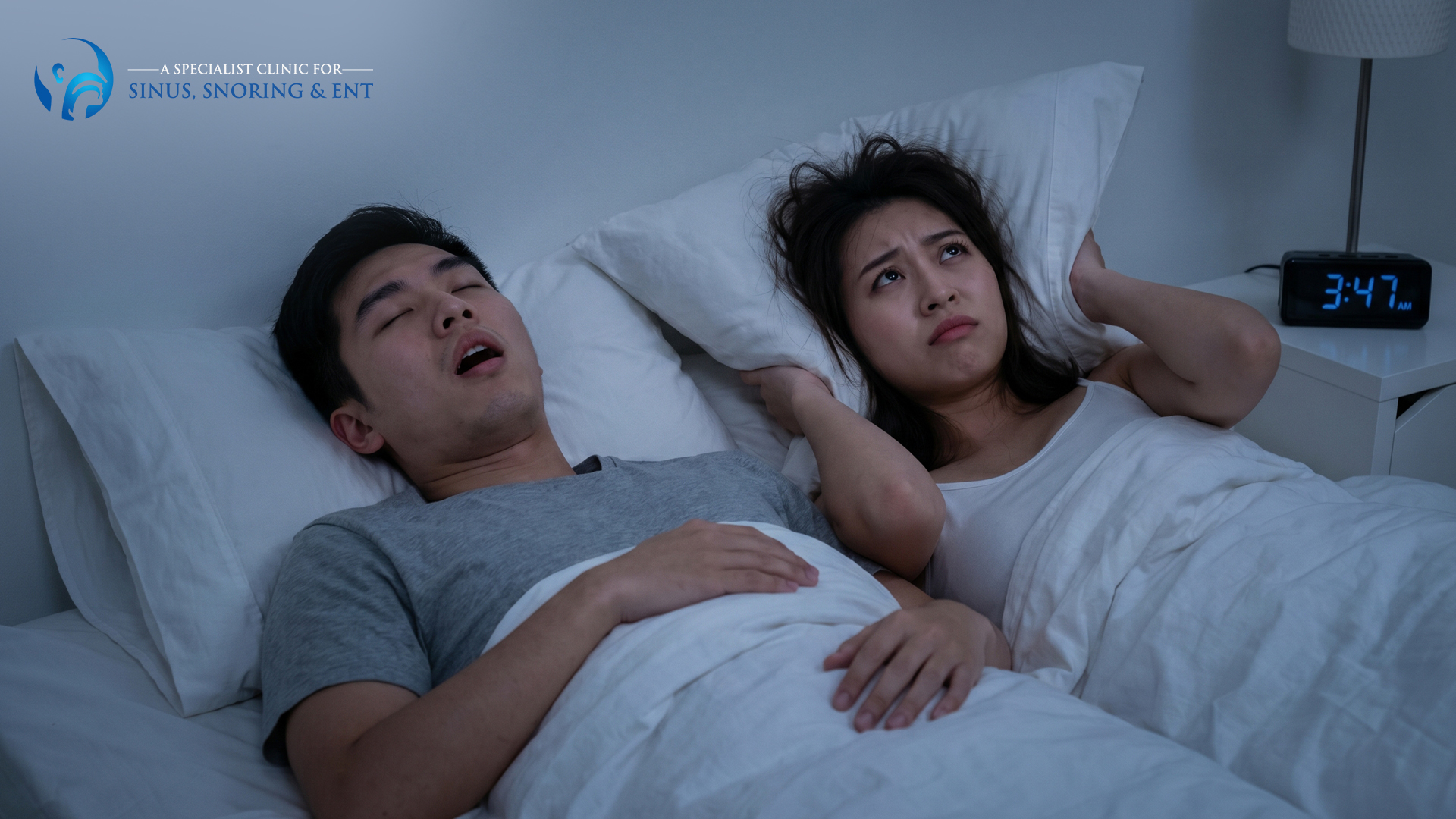
The most telling sign is often what a bed partner observes rather than what the patient reports: witnessed pauses in breathing during sleep, gasping or choking at night, or persistently loud snoring that is not positional.
From the patient's perspective: waking unrefreshed despite apparently adequate sleep, significant daytime sleepiness, difficulty concentrating, morning headaches, and needing to urinate at night more than usual can all be signs.
Screening tools — the STOP-BANG questionnaire and the Epworth Sleepiness Scale — help quantify risk and are available through any GP or ENT clinic. But screening is not the same as diagnosis. A sleep study is required to confirm obstructive sleep apnoea (OSA), establish severity, and guide treatment.
Home-based sleep studies are available in Singapore and are generally appropriate for straightforward presentations. In-laboratory polysomnography is indicated for more complex clinical pictures or where home testing is inconclusive.
Snoring is the sound of partial upper airway vibration during sleep. It ranges from mild to severe and does not, on its own, indicate that breathing is being interrupted.
Obstructive sleep apnoea (OSA) involves complete or near-complete airway obstruction during sleep, causing oxygen levels to drop and briefly waking the brain to restore normal breathing. This cycle can occur dozens or hundreds of times a night without the patient having any conscious awareness of it.
Not all snorers have OSA. Most OSA patients snore, but the loudness of snoring does not reliably predict OSA severity. Patients with quiet snoring can have significant apnoea, and very loud snorers may have minimal apnoea events. A sleep study remains the standard method used to distinguish between them.
OSA carries cardiovascular, metabolic, and neurocognitive consequences over time that simple snoring does not. For patients who snore regularly with any of the risk factors or symptoms noted above, a sleep study is the appropriate next step.
Weight loss may help reduce the severity of obstructive sleep apnoea (OSA), particularly in patients who are overweight. In some cases of mild to moderate OSA, it may lead to significant improvement. Excess tissue around the neck and throat can contribute to airway narrowing, and reducing this may help decrease obstruction.
The clinical picture is often more complex. Obstructive sleep apnoea can disrupt sleep quality and may affect metabolic regulation in ways that make weight management more challenging. Addressing the apnoea — for example with CPAP — may support overall sleep quality, which can play a role in weight management. For patients considering weight loss surgery, OSA is typically assessed as part of pre-operative evaluation due to its relevance to airway and anaesthetic considerations.
Weight management is worth pursuing actively, but it should not be used as a reason to defer treatment for established OSA. Active sleep apnoea needs active management.
Surgery for OSA is not a single procedure. It is targeted to the specific site or sites of upper airway obstruction in each patient. Targeting the appropriate anatomical level is an important consideration, which is why pre-surgical assessment plays a key role.
In selected patients, drug-induced sleep endoscopy (DISE) is performed: the patient is sedated to approximate natural sleep while a flexible scope is used to observe exactly where the airway collapses. This guides surgical planning more precisely than a standard awake examination.
Surgical options by level of obstruction:
- Nasal surgery (septoplasty, turbinate reduction): may be considered in patients with nasal obstruction, which can contribute to OSA severity or affect tolerance to CPAP.
- Palatal procedures: target the soft palate and uvula. Outcomes are influenced by whether the palate is the primary obstruction site.
- Tonsillectomy: effective when enlarged tonsils are the primary cause, which is more common in children than adults.
- Tongue base procedures: reduce tissue at the base of the tongue, a common obstruction site in adults that can be missed in simpler assessments.
- Hypoglossal nerve stimulation: an implanted device that activates the tongue during sleep to prevent it from falling back. Available for selected patients who cannot tolerate CPAP.
- Maxillomandibular advancement: moves the upper and lower jaw forward; may be considered for selected patients and is a more extensive surgical procedure.
Surgery is usually not a standalone solution for moderate to severe OSA, but it may help reduce severity and improve CPAP tolerance. In selected patients with mild disease and specific anatomy, it may provide adequate control.
DISE is a diagnostic procedure performed under sedation to approximate natural sleep, during which a flexible endoscope is passed through the nose to observe the upper airway. Unlike an awake examination — which cannot replicate what happens when muscles relax during sleep — DISE shows where the airway is collapsing and how.
This is clinically important because selecting a surgical procedure without knowing the collapse pattern is imprecise. DISE allows a targeted surgical plan based on what is actually occurring during simulated sleep. It takes approximately 20 minutes and is performed in an operating theatre setting.
DISE is not required for every OSA patient. For straightforward cases where the cause is evident on clinical examination, it is unnecessary. For adults with unclear anatomy or where previous surgery has not achieved the expected result, it is a valuable step before any further intervention.
Children's ENT FAQs
Children warrant a lower threshold for ENT referral than adults. Even short periods of hearing disruption during key developmental stages can affect speech and language. The following questions cover the most common parental concerns.
Ear infections are common in young children and most resolve appropriately with treatment. ENT assessment is warranted when:
- Three or more acute infections occur within six months, or four or more within a year
- Middle ear fluid (otitis media with effusion / "glue ear") persists beyond three months
- Associated hearing loss or speech delay is present or suspected
- Infections are not responding to standard antibiotic treatment
- The eardrum has perforated and not healed
- There is mastoid swelling, severe ear pain, or facial weakness alongside an infection — these are urgent
Children are more prone to ear infections than adults partly because the eustachian tube is more horizontal in young children, making drainage less efficient. Many children grow out of recurrent infections as anatomy matures. However, persistent middle ear fluid during critical periods of speech and language development is worth treating promptly, because the hearing impact during those years matters.
Age-appropriate developmental milestones provide a useful framework:
- Newborn to 3 months: should startle to sudden loud sounds and calm to a familiar voice
- 4 to 6 months: should turn toward sounds and begin babbling
- 9 to 12 months: should respond to their name and begin to understand simple words
- 18 months to 2 years: should have recognisable words; speech that is unclear to adults outside the family warrants assessment
- School age: difficulty following instructions, needing things repeated, inattention, or unexplained academic difficulties can all reflect hearing problems
Newborn hearing screening in Singapore identifies significant hearing loss at birth. Mild to moderate hearing loss may not be detected at birth and can become apparent only as developmental milestones approach. When hearing problems in children are suspected, a formal audiology assessment with tympanometry provides objective information and is well tolerated.
In younger children — broadly those under seven or eight — the adenoid pad sits at the back of the nose and can obstruct nasal drainage as well as harbour bacteria. For children with chronic rhinosinusitis or recurrent ear disease not responding to medical management, adenoidectomy is often the appropriate first surgical step and can resolve both the sinus and ear problems together.
The evidence for adenoidectomy in paediatric chronic rhinosinusitis is stronger in younger children. In older children and adolescents who have not responded to adenoidectomy and medical treatment, a full sinus assessment including CT imaging may be needed to determine whether FESS is appropriate.
The clearest indication is obstructive sleep apnoea caused by enlarged tonsils and adenoids. Adenotonsillectomy is effective in this context and is the most common surgical treatment for childhood OSA. When performed for appropriate indications, improvements may extend beyond sleep quality, including areas such as behaviour, attention, school performance, and growth.
For recurrent tonsil infections, surgical thresholds follow the Paradise Criteria: broadly, seven or more significant infections in a year, five per year for two consecutive years, or three per year for three consecutive years. Infections need to be properly documented and adequately treated.
The decision is made in the context of the full picture: the child's age, weight, impact on daily life, and a balanced discussion of expected benefits and recovery with the family.

Childhood sleep apnoea often presents differently from adults. Excessive daytime sleepiness — the classic adult symptom — is less consistent in children. Parents typically describe:
- Loud, laboured breathing through the mouth during sleep
- Witnessed pauses or gasping episodes
- Restless sleep and excessive sweating
- Sleeping in unusual positions — head extended back, or sitting propped up
- Behavioural problems, hyperactivity, or inattention during the day
- Bed-wetting in a child who was previously dry at night
If a child snores loudly on most nights and any of the above features are present, an ENT assessment is appropriate. In most cases, examination identifies enlarged tonsils and adenoids as the cause. A formal sleep study may be recommended to quantify severity, particularly where there are additional medical factors such as obesity, cardiac concerns, or a neurodevelopmental condition.
Treatment & Recovery FAQs
What recovery actually looks like, why follow-up matters, where non-surgical treatment fits, and what the newer minimally invasive procedures offer.
Post-operative care is as important as the surgery itself — and this is the part that is most commonly underestimated. A typical recovery timeline after standard FESS:
Days 1 to 3: Nasal stuffiness, blood-stained discharge, and some facial pressure are expected. Avoid blowing the nose, bending forward, or strenuous activity. Saline irrigation usually begins within the first day or two and should be performed consistently — typically two to three times daily.
Week 1: Most desk-based work can be resumed. The first follow-up appointment, which usually involves endoscopic debridement (clearing crusts from inside the nose), typically occurs around this point.
Weeks 2 to 4: Regular debridement appointments continue. These follow-up visits are an important part of recovery. Missing them may affect longer-term results.
4 to 6 weeks: Strenuous physical activity can usually be resumed around this time, depending on the extent of surgery.
3 months: Outcomes generally become clear at this point. Mucosal healing continues beyond three months, but functional results are usually apparent.
Follow-up is not optional after ENT surgery — it is part of the treatment.
After FESS, structured follow-up typically starts within the first week for endoscopic debridement and continues at intervals of one to two weeks through the first month, reducing in frequency through to three months. Most patients require between three and six post-operative cleaning sessions in total. The estimated total post-operative cost is approximately $1,500–$3,000 across these sessions — a figure that is often not included in initial surgical estimates and should be budgeted for separately.
After tonsillectomy, white slough forming in the throat is a normal part of healing. Secondary bleeding — which can occur around day five to ten when the surgical scab separates — is the primary risk to be aware of. Any bleeding from the throat after tonsillectomy should be treated as an emergency requiring same-day assessment, not managed at home.
Warning signs to report promptly after any ENT surgery: significant fresh bleeding, severe persistent headache, visual changes, clear watery nasal discharge, or fever with increasing facial pain.
Non-surgical treatments are effective for many ENT conditions. Where clinically appropriate, they are usually considered before surgical options.
- Intranasal corticosteroid sprays are commonly used in the management of allergic rhinitis and chronic rhinosinusitis. When used correctly and consistently, they help reduce mucosal inflammation.
- Saline nasal irrigation reduces bacterial load, clears allergens, and improves ciliary function.
- CPAP is the established first-line treatment for moderate to severe obstructive sleep apnoea.
- Voice therapy achieves substantial improvement for functional voice disorders and early-stage vocal cord nodules.
- Allergen immunotherapy modifies the underlying allergic response over time for suitable patients.
- Biologics: for severe, recurrent nasal polyp disease with type-2 inflammation, targeted biologic therapy can reduce polyp burden in eligible patients. Not a first-line treatment; eligibility is assessed on clinical criteria.
Surgery is considered when conservative measures have been given an adequate trial and the evidence supports it, or when structural pathology requires correction.
The field has moved meaningfully toward less invasive approaches over the past decade:
- Balloon sinuplasty: a balloon catheter dilates blocked sinus openings rather than removing tissue. Suitable for specific anatomical presentations; not a substitute for full FESS in patients with significant polyp disease or extensive chronic sinusitis.
- In-office radiofrequency turbinate reduction: for turbinate hypertrophy contributing to nasal obstruction, this can be performed in the clinic under local anaesthesia with minimal downtime.
- Eustachian tube balloon dilation: for refractory eustachian tube dysfunction in adults, a balloon catheter dilates the tube under general anaesthesia.
- Coblation: a low-temperature energy technique used in tonsil surgery and tongue base procedures, with evidence suggesting reduced post-operative pain compared to some traditional methods.
- Image-guided navigation in FESS: particularly valuable in complex and revision sinus surgery near the skull base or orbit.
Prevention & Lifestyle FAQs
What patients can do day-to-day — preventing chronic sinusitis, reducing sleep apnoea severity, supporting a child's allergy profile, and looking after the ears.
Not all chronic sinusitis is preventable — some patients have an underlying predisposition related to their immune response, anatomy, or allergy profile. Practical steps that reduce risk and severity include:
Treat rhinitis properly. Undertreated allergic rhinitis is among the most common drivers of chronic sinus disease. Consistent intranasal steroid use and allergen avoidance reduce the inflammatory burden on the sinuses.
Use saline nasal rinses. Daily saline irrigation reduces mucosal inflammation, clears allergens and irritants, and supports ciliary function. Singapore's climate — high humidity and periodic haze — makes this particularly relevant for susceptible patients.
Address dental health. The roots of upper back teeth sit close to the floor of the maxillary sinus. Dental infections can trigger or perpetuate sinus disease, and this connection is more common than is often recognised.
Act on upper respiratory tract infections early. Sinus infections that follow on from a cold tend to develop when viral illness persists beyond ten days without improvement.
Several changes have meaningful evidence supporting them, though none replaces active treatment for established moderate to severe OSA.
Weight management has the clearest evidence of benefit. Even modest weight loss in overweight patients can reduce OSA severity, and substantial loss can resolve mild to moderate disease.
Sleep position matters for positional OSA. Sleeping on the back worsens obstruction for many patients; lateral sleeping — supported by positional aids if needed — can meaningfully reduce apnoea events in this group.
Avoiding alcohol and sedatives before sleep reduces upper airway muscle tone and can convert mild apnoea to moderate or moderate to severe.
Treating nasal obstruction — through management of rhinitis or correction of septal deviation — improves both natural sleep quality and CPAP tolerance. Nasal obstruction forcing mouth breathing worsens upper airway dynamics and is frequently an addressable factor.
Some risk factors are modifiable, though allergy is influenced by genetics, early immune development, and environmental exposures in ways that are not fully controllable.
Based on current evidence: breastfeeding in infancy supports immune development and has a protective association in high-risk families. Early introduction of allergenic foods — peanut, egg — is now supported by evidence as reducing, rather than increasing, allergy risk in high-risk infants. This guidance has changed substantially in recent years and is worth discussing with a paediatrician. Avoiding tobacco smoke exposure in utero and in early childhood reduces allergic and respiratory disease risk.
For children with a strong family history of allergic disease, early discussion with a paediatrician or allergy specialist is worthwhile.
The ears are largely self-cleaning. Earwax migrates naturally outward, carrying debris with it. Cotton buds inserted into the ear canal push wax inward, compact it against the eardrum, and can traumatise the canal lining. Ear candles have no evidence of benefit and carry genuine burn and blockage risks. Neither is appropriate for routine ear care.
Clean only the outer ear — the bowl of the ear — with a face cloth.
Patients prone to wax buildup — including hearing aid users and those who have had ear surgery — benefit from regular professional microsuction rather than home management. Dry, flaky, or persistently itchy ear canals can benefit from small amounts of olive oil to maintain skin health, though persistent symptoms should be examined rather than self-treated.
Need Medical Advice from an ENT Specialist?
No referral is required. Whether you are seeking a diagnosis, treatment advice or a second opinion, Dr Gan provides specialist assessment and personalised treatment planning.
Contact UsCosts, Medisave & Insurance
This section provides a brief orientation. Full detail on fees, procedure costs, Medisave withdrawal limits, and insurance navigation is in the dedicated guide: ENT Specialist Consultation Cost Singapore 2026.
Selected ENT surgical procedures performed at MOH-accredited day-surgery centres are Medisave-claimable. These include septoplasty, FESS, tonsillectomy, adenoidectomy, and myringotomy with ventilation tubes, among others. Daily withdrawal limits apply under the MOH Surgical Table.
Routine audiometry is not Medisave-claimable. Nasoendoscopy, however, is considered a day surgery procedure performed in the clinic and is Medisave-claimable.
Confirm procedure codes, accreditation status, and applicable withdrawal limits with the clinic before any procedure is scheduled.
Coverage depends on the policy and on documented medical necessity. Most Integrated Shield Plans and corporate health policies cover medically necessary ENT surgery, subject to deductibles, co-insurance, exclusions for pre-existing conditions, and panel status.
Key steps before any procedure: obtain pre-authorisation, ensure the referral letter documents the diagnosis and that appropriate conservative treatment has been attempted, and confirm whether the insurer requires a Letter of Guarantee before admission. Check whether your specialist is on your insurer's panel — this single step can significantly affect the out-of-pocket amount.
At Dr Gan's clinic, the consultation fee is $196.20 (inclusive of GST) for up to 30 minutes. Additional investigations — nasoendoscopy, audiometry, imaging — are billed separately if performed during the visit.
For a full breakdown of private ENT consultation fees, diagnostic costs, surgical prices by procedure, Medisave limits, and post-operative care costs sourced from MOH and CPF published data, see the ENT Specialist Consultation Cost Singapore 2026 guide.
- See an ENT specialist when symptoms persist beyond two to three weeks of GP treatment, keep recurring, or affect hearing, breathing, sleep, or voice. Sudden hearing loss is a medical emergency requiring same-day assessment.
- Not all ENT conditions need surgery. Many — including allergic rhinitis, functional voice disorders, and mild to moderate OSA — are effectively managed without procedures when appropriate non-surgical treatment is followed consistently.
- ENT conditions often overlap. Sinus disease worsens sleep; eustachian tube dysfunction links ear and throat problems. Assessment that considers the full picture — rather than treating each condition in isolation — leads to more complete results.
- Children warrant a lower threshold for ENT referral. Even short periods of hearing loss during key developmental years can affect speech and language. When in doubt, a formal audiology assessment is appropriate.
- Post-operative care after sinus surgery is as important as the surgery itself. Consistent saline irrigation, correct use of nasal steroid sprays, and attending follow-up appointments help maintain long-term results.
- No GP referral is needed for a private ENT consultation in Singapore.
About Dr Gan Eng Cern
This article is medically reviewed by Dr Gan Eng Cern, a fellowship-trained ENT specialist and rhinologist practising at Mount Elizabeth Novena Hospital in Singapore.
Dr Gan's subspecialty focus is rhinology (nose and sinus conditions) and endoscopic skull base surgery. He completed his rhinology fellowship at the St Paul's Sinus Centre, University of British Columbia, Vancouver, Canada, funded by the Health Manpower Development Programme (HMDP) Award from the Ministry of Health, Singapore. Before entering private practice, he served as the Deputy Director of the Rhinology Service at Changi General Hospital (2013–2017).
He holds an MBBS (University of New South Wales), MRCS (Edinburgh), MMed in ENT (NUS), and FAMS. He has numerous publications in peer-reviewed international ENT journals and textbook chapters, and was a Senior Clinical Lecturer at the NUS Yong Loo Lin School of Medicine.
| Detail | Information |
|---|---|
| Subspecialty | Rhinology (nose & sinus) · Endoscopic skull base surgery |
| Location | 38 Irrawaddy Road, #08-45, Mount Elizabeth Novena Hospital, Singapore 329563 |
| Consultation Fee | SGD$196.20 (inclusive of GST) within 30 minutes |
| Clinic Hours | Mon–Fri: 9:00am – 5:00pm · Sat: 8:30am – 12:00pm |
| Languages | English, Hokkien, Malay, Mandarin (limited) |
| Referral Required? | No — direct consultation available |
| Medisave | Accredited — eligible procedures claimable |
| Insurance Panels | NTUC Income (IncomeShield) · Singlife · MHC Network · Allianz Care · Alliance Medinet · iXchange · Parkway Shenton |
For Dr Gan's full profile — qualifications, research, awards, teaching appointments, and publications — visit About Dr Gan Eng Cern.
Consult Dr Gan Eng Cern
ENT Specialist & Rhinologist · Mount Elizabeth Novena Hospital
Contact the clinic
Call 6253 7296 during clinic hours or WhatsApp +65 9058 2480 at any time. No referral letter required.
Arrange a consultation
Clinic staff can assist with insurance pre-authorisation, Letters of Guarantee (LOG), and Medisave eligibility before your visit.
Visit the clinic
38 Irrawaddy Road, #08-45, Mount Elizabeth Novena Hospital, Singapore 329563. Directly connected to Novena MRT (NS20). Bring your NRIC/passport, any medical reports or scans, and insurance details.
Medical Disclaimer: The information on this page is for general educational purposes only. It does not constitute medical advice and is not a substitute for a formal clinical assessment by a qualified specialist. Please consult a doctor for diagnosis and treatment recommendations specific to your condition. In an emergency, go to the nearest A&E department or call 995.
Last updated: April 30, 2026 · © Dr Gan Eng Cern ENT Clinic
References:
1. Chandrasekhar SS, et al. Clinical Practice Guideline: Sudden Hearing Loss (Update). Otolaryngology–Head and Neck Surgery. 2019. DOI: 10.1177/0194599819859885
2. Stachler RJ, et al. Clinical Practice Guideline: Hoarseness (Dysphonia) (Update). Otolaryngology–Head and Neck Surgery. 2018. DOI: 10.1177/0194599817751030
3. Ministry of Health, Singapore. Hospital Bills and Fee Benchmarks. www.moh.gov.sg
4. Central Provident Fund Board, Singapore. MediSave claimable procedures. www.cpf.gov.sg


