
 +65 6253 7296
General ENT
8 Common Ear, Nose & Throat Conditions Treated by an ENT Specialist in Singapore
June 12, 2026

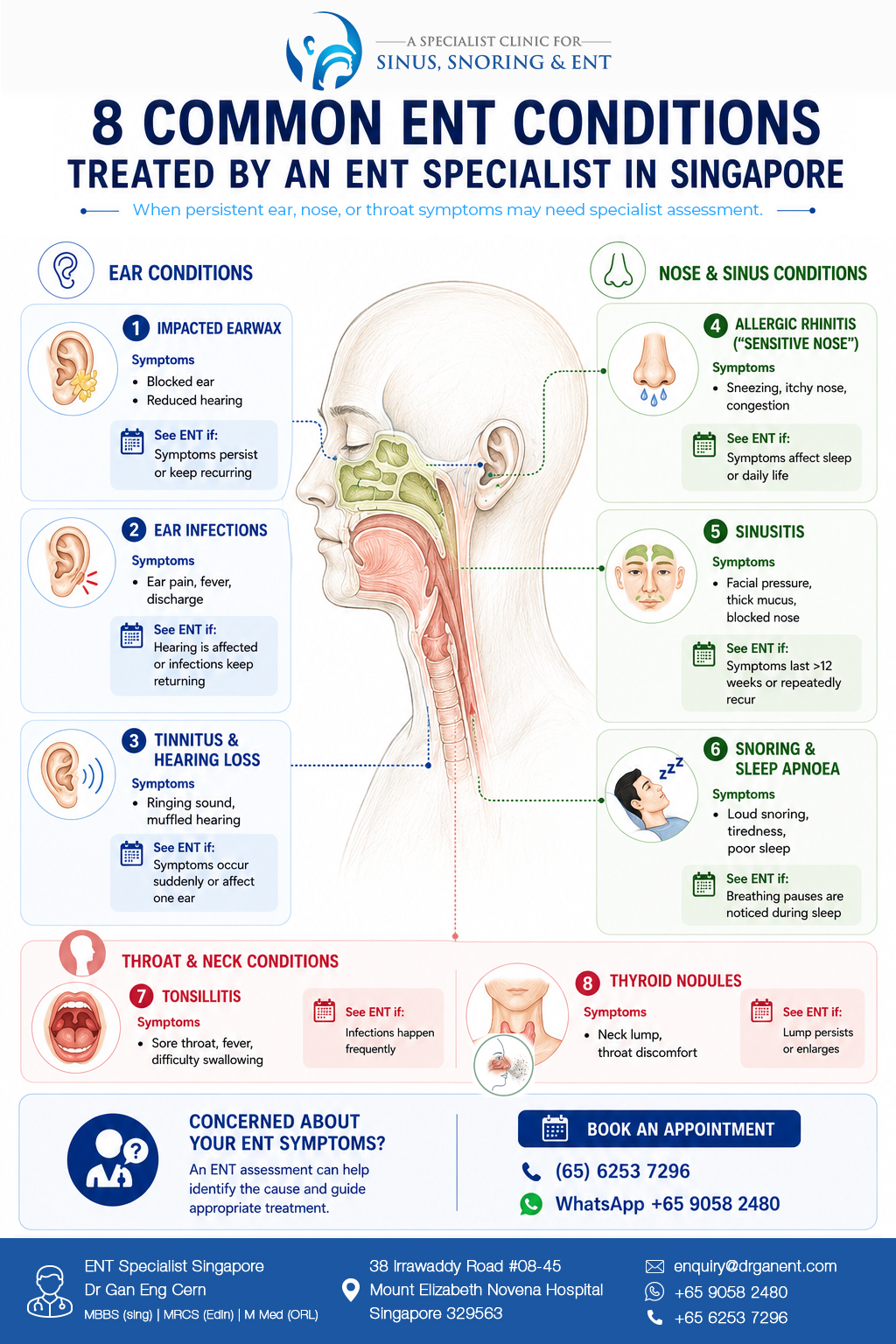
Quick Answer: ENT specialists in Singapore treat conditions affecting the ears, nose, throat, sinuses, hearing, sleep, and neck. Common problems include sinusitis, allergic rhinitis, snoring and sleep apnoea, ear infections, hearing loss, tinnitus, and tonsillitis. You should consider seeing an ENT specialist if symptoms are persistent, recurrent, affect sleep or hearing, or do not improve with initial treatment.
Otolaryngology, often referred to as Ear, Nose, and Throat (ENT) Specialist care, is a medical speciality dedicated to the diagnosis and treatment of disorders affecting the ear, nose, and throat, as well as related structures in the head and neck. ENT specialists, also known as otolaryngologists, are physicians trained to help manage a wide range of conditions that affect both adults and children in these areas.
In Singapore, ENT conditions such as blocked nose, sinus infections, snoring, hearing problems, and recurrent throat infections are common reasons people seek specialist care. Singapore’s humid climate, exposure to allergens like house dust mites, and urban air irritants may contribute to persistent nasal and sinus symptoms in some individuals.
Let’s take a closer look at some of the common conditions that individuals seek help from an ear, nose, and throat specialist:
1. Snoring and Sleep Apnea

Snoring can be more than just a disruptive noise. It can be a sign of Obstructive Sleep Apnoea (OSA), a condition where a person’s breathing repeatedly stops and starts during sleep. This may be caused by the throat muscles intermittently relaxing and blocking the airway. If left untreated, OSA can lead to more serious complications, such as cardiovascular problems. An ear, nose, and throat doctor can help diagnose and manage OSA, improving sleep quality and overall health.
Some patients may also notice symptoms such as waking up tired despite a full night’s sleep, morning headaches, poor concentration, or daytime sleepiness. In some cases, a persistently blocked nose or enlarged tissues within the nose and throat may contribute to snoring and sleep-disordered breathing.
When should you see an ENT specialist for snoring?
You may benefit from an ENT assessment if snoring is loud and persistent, if breathing pauses are witnessed during sleep, or if symptoms are affecting sleep quality, energy levels, or daily functioning.
2. Sensitive Nose (Rhinitis – Allergic and Non-allergic)

Rhinitis, or a sensitive nose, refers to inflammation of the nasal cavity. Symptoms include sneezing, a blocked or runny nose, and itchy eyes. Allergic rhinitis may be triggered due to exposure to allergens in the air, such as house dust mites. On the other hand, non-allergic rhinitis can be triggered by strong odours, temperature changes, cigarette smoke and hormonal changes. An ear, nose, and throat specialist can help identify the cause of your rhinitis and recommend appropriate treatment options.
In Singapore, allergic rhinitis is particularly common due to year-round humidity and exposure to indoor allergens such as dust mites. Some people may describe their symptoms as having a “sensitive nose” that reacts easily to air-conditioning, perfumes, smoke, or weather changes.
Persistent nasal congestion may sometimes be mistaken as “just allergies,” when underlying issues such as turbinate enlargement, sinus inflammation, or structural nasal blockage may also be contributing to symptoms.
When should you see an ENT specialist for rhinitis?
If symptoms are persistent, keep returning despite medication, interfere with sleep, or cause ongoing nasal blockage, specialist assessment may help identify underlying contributing factors.
3. Sinusitis

Sinusitis occurs when the tissue lining the sinuses becomes inflamed or swollen. As a result, mucous can be trapped in the sinuses and lead to bacterial infection. Symptoms may include thick or coloured mucous, blocked and congested nose, facial pain, and a reduced sense of smell. An ear, nose, and throat doctor can help diagnose sinusitis and recommend treatment to help relieve symptoms and reduce complications.
Many patients with chronic sinusitis describe constantly feeling “stuffy,” having pressure around the cheeks or forehead, or experiencing a reduced sense of smell for weeks or months at a time. These symptoms may overlap with allergies, making sinus problems difficult to recognise early.
Singapore’s humid environment may also contribute to ongoing nasal inflammation in individuals prone to allergies or chronic sinus conditions.
When should you see an ENT specialist for sinus problems?
You should consider specialist review if sinus symptoms last more than 12 weeks, repeatedly recur, or continue despite medications prescribed by a general practitioner.
4. Tonsillitis

Tonsillitis is an infection of the tonsils, two oval-shaped lumps of tissues found at the back of the throat. The infection can be recurrent; patients usually experience severe sore throat, difficulty swallowing, and fever. Surgical removal of tonsils (tonsillectomy) may be recommended to reduce the frequency of getting tonsil infections.
Children and adults with recurrent tonsillitis may experience repeated disruptions to school, work, sleep, and daily activities. Some patients may also develop enlarged tonsils that contribute to snoring or disturbed sleep.
When should you see an ENT specialist for tonsillitis?
Specialist review may be helpful if throat infections occur frequently, symptoms are severe, or enlarged tonsils are affecting swallowing, breathing, or sleep quality.
5. Impacted Earwax

Earwax helps to keep the ear canal clean and protect it from water, foreign objects, injury and infection. However, when excessive wax build-up (known as impacted earwax) fails to clear on its own, this may cause a person to have decreased hearing levels in the affected ear, earache, or a secondary ear infection. Ear wax removal can be done under microscope guidance by an ear, nose, and throat doctor.
Many people attempt to clean their ears using cotton buds, which may unintentionally push earwax deeper into the ear canal. This can worsen blockage and increase the risk of irritation or infection.
When should you see an ENT specialist for earwax blockage?
Persistent blocked ear sensation, tinnitus, hearing reduction, ear discomfort, or repeated earwax build-up may require professional assessment and safe removal.
6. Ear Infections

Ear infections can affect the outer or inner ear. Otitis externa, also known as swimmer’s ear, is an infection and inflammation of the ear canal. Another type is middle ear infections (Otitis media), which is more common in children as their eustachian tubes are immature, and germs can reach the middle ear more easily. Symptoms include ear pain, fever, and hearing loss. An ear doctor can help diagnose the type of ear infection and recommend appropriate treatment.
Children with recurrent ear infections may also experience temporary hearing difficulties, disturbed sleep, irritability, or speech and developmental concerns if middle ear fluid persists.
Singapore’s warm and humid weather may also increase the risk of outer ear infections, particularly in individuals who swim frequently or have sensitive skin conditions affecting the ear canal.
When should you see an ENT specialist for ear infections?
Medical review is important if ear pain is severe, symptoms keep recurring, hearing appears reduced, or infections do not improve with initial treatment.
7. Tinnitus and Hearing Loss

Tinnitus is a ringing, buzzing, or hissing sound in the ears. These can be caused by hearing loss from prolonged exposure to loud noises or age-related hearing loss. While the majority of tinnitus cases are not dangerous, symptoms like hearing loss in one ear (or worse in one ear) and tinnitus of a thumping nature can be red flags to indicate a more serious underlying condition. An ear, nose and throat specialist can evaluate your tinnitus and recommend treatment options to manage symptoms.
Some patients notice tinnitus more prominently at night or in quiet environments. Others may describe difficulty following conversations in noisy settings even before recognising hearing loss themselves.
When should you see an ENT specialist for tinnitus or hearing loss?
Persistent tinnitus, sudden hearing changes, one-sided hearing loss, or dizziness associated with hearing symptoms should be medically evaluated.
8. Thyroid Nodules/Lumps

Thyroid nodules are lumps that can develop in any part of the thyroid gland. These lumps can be solid or filled with liquid, appearing as a single nodule or in a cluster. Though common, thyroid nodules are benign or non-cancerous, 90% of the time. Benign nodules can be monitored and managed; otherwise, thyroid surgery in Singapore may be recommended if a thyroid nodule is suspected to be cancerous.
Some thyroid nodules are discovered incidentally during health screening or imaging performed for unrelated reasons. Others may present as a visible neck lump, throat discomfort, swallowing difficulty, or voice changes.
When should you see an ENT specialist for a neck lump?
A neck lump that persists, enlarges, affects swallowing or breathing, or is associated with voice changes should be assessed medically.
Seeking the Help of an Ear, Nose, and Throat Specialist
While primary care physicians can help manage simple conditions, such as sensitive nose, sinusitis, ear infections, and tonsillitis, persistent or complex issues may require the assistance of an ear, nose, and throat specialist. They can perform specific diagnosis, testing, and treatment for a wide range of ear, nose, and throat disorders.
Many ENT symptoms can overlap. For example, a blocked nose may be related to allergies, sinusitis, a deviated nasal septum, or enlarged nasal tissues. Similarly, snoring and poor sleep may sometimes be linked to underlying nasal obstruction rather than the throat alone. Careful assessment helps identify the underlying cause and guide appropriate management.
Schedule Your ENT Appointment Today
Where to get help
As seen, children are at high risk of developing various kinds of ENT problems. They can seek medical attention from a primary care doctor first but when these problems become persistent and affect the development or quality of life of your child, it is a sign that you should start looking for an ENT specialist for your child.
Adults should also consider specialist assessment if ENT symptoms repeatedly recur, affect sleep quality, breathing, hearing, concentration, or daily activities despite initial treatment.
Where to get help
Medically reviewed by Dr Gan Eng Cern


